
Overview
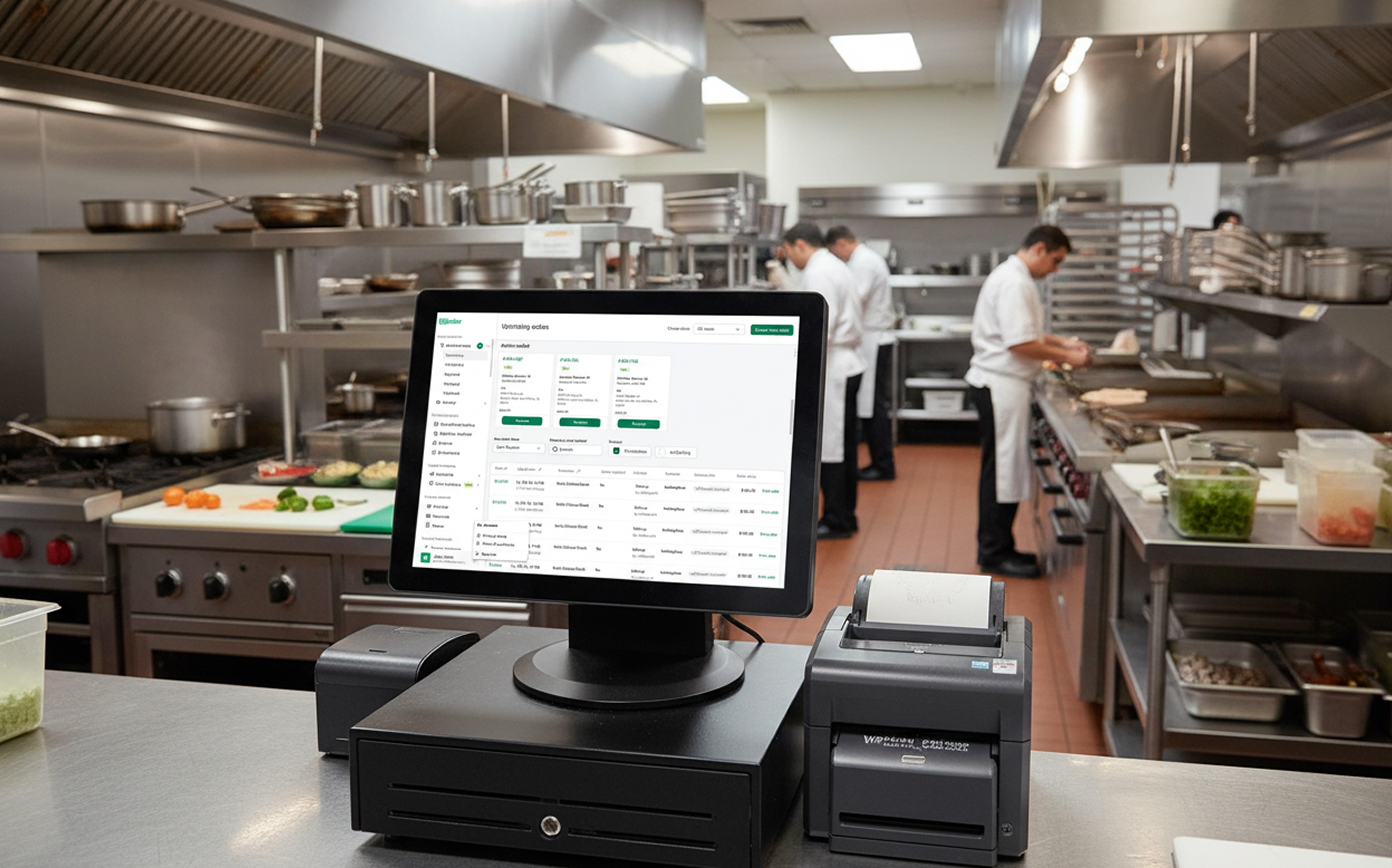
ezManage is ezCater’s all-in-one SaaS command center for restaurant and catering partners, empowering them to run their catering businesses with confidence. With ezManage, providers can seamlessly accept and manage orders from any channel, coordinate deliveries, and monitor every order in real time. The platform unlocks powerful features, including performance analytics, financial reporting, customer reviews, marketing tools, and operational controls, giving partners total visibility and control in a single, unified system.
At the end of 2024, I took on the Supply and Operations domain. After learning about the products, metrics, and customer insights, I compiled a design-debt backlog for ezManage—ezCater's restaurant-partner management platform.
The top priority was overhauling ezManage’s navigation—the backbone of the experience. Improving navigation and search would resolve numerous design issues across the platform.
+95%
-32%
100%
Problem area
No clear organization, creating chaos for restaurant partners
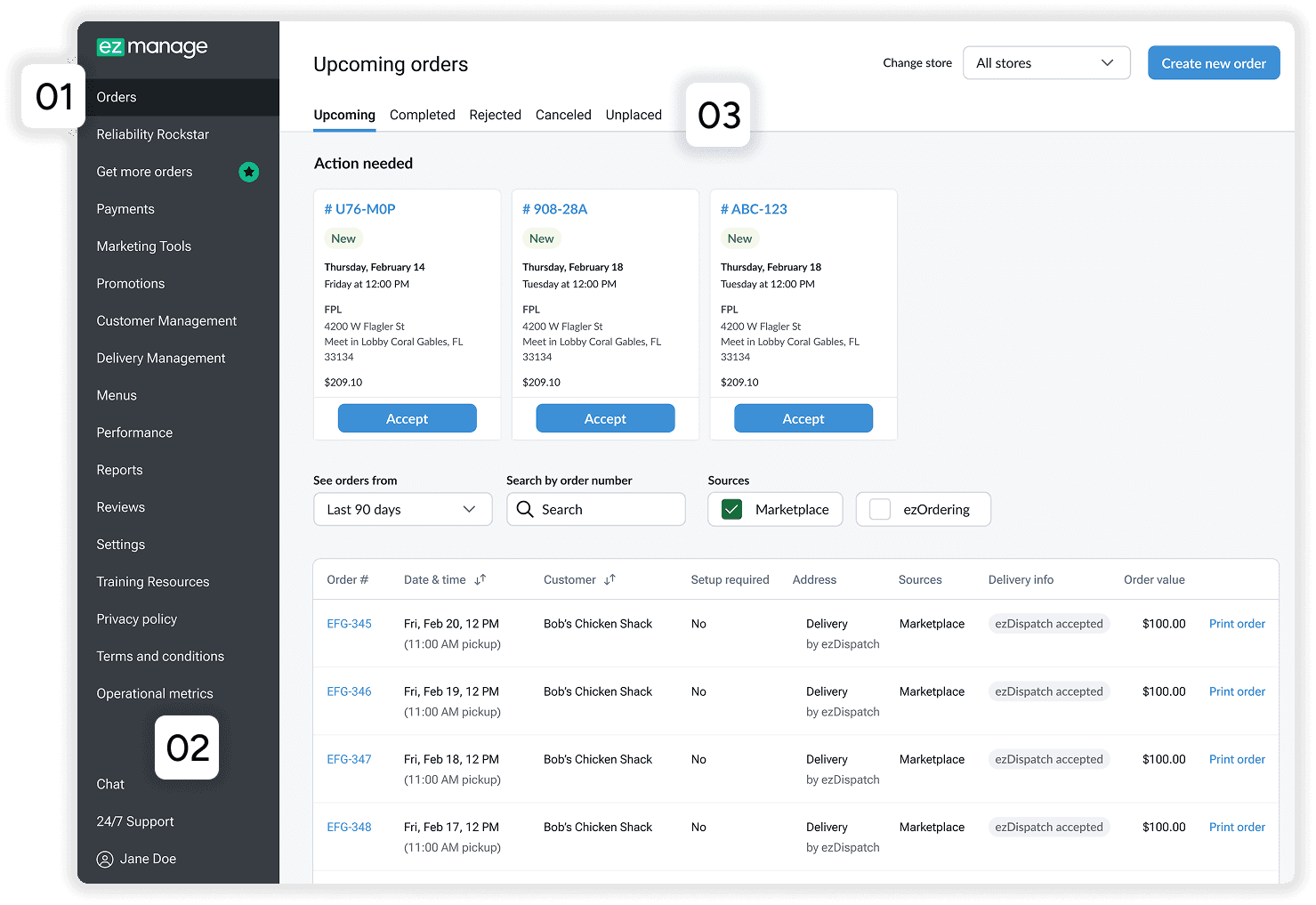
Our restaurant partners were drowning in actions and data spread across the ezManage. Without clear insights, tasks needed to be complete and a continuous onboarding experience, they missed out on orders, getting more orders through marketing campaigns and setting up their stores for success. For ezCater, it led to support tickets, countless hours on the phone and unhappy customers who never received their orders. Our restaurant partners didn’t know where to find important information and settings to properly execute catering orders.
Product before redesign
Design goals
What I aimed to achieve
Research discovery
Our restaurant partners operate differently than we originally assumed
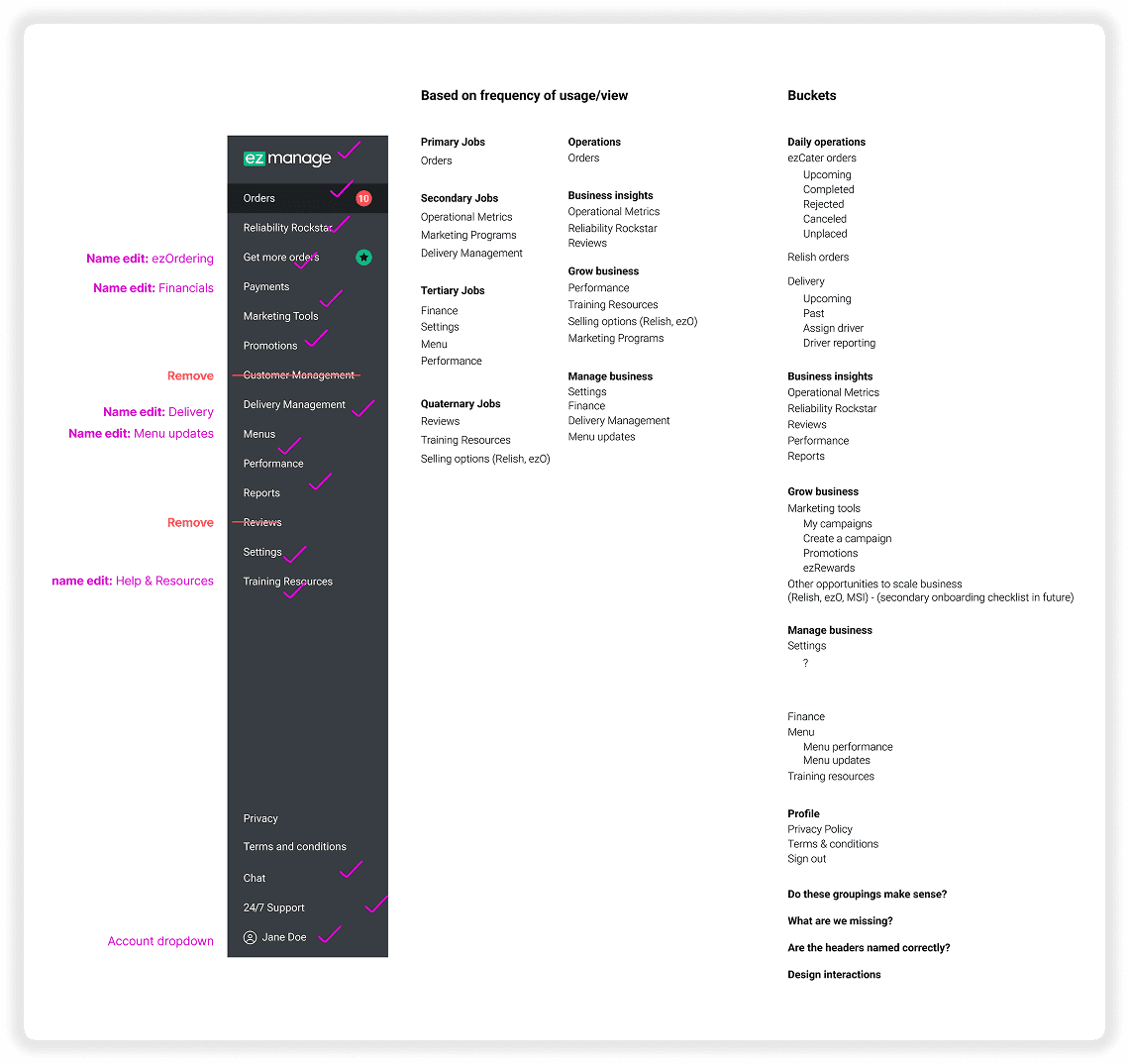
I partnered with UX Research to run a jobs-to-be-done workshop that uncovered how restaurant partners actually use ezManage in their catering workflows. We observed partners naturally grouping tasks into categories like daily operations, business insights, and store updates, which led me to propose mirroring these operational groupings in the product—an approach we validated through testing as the dominant mental model across partners.
Refining restaurant partner jobs into operational buckets
Design decision 01
Choosing clarity over complexity in visualization
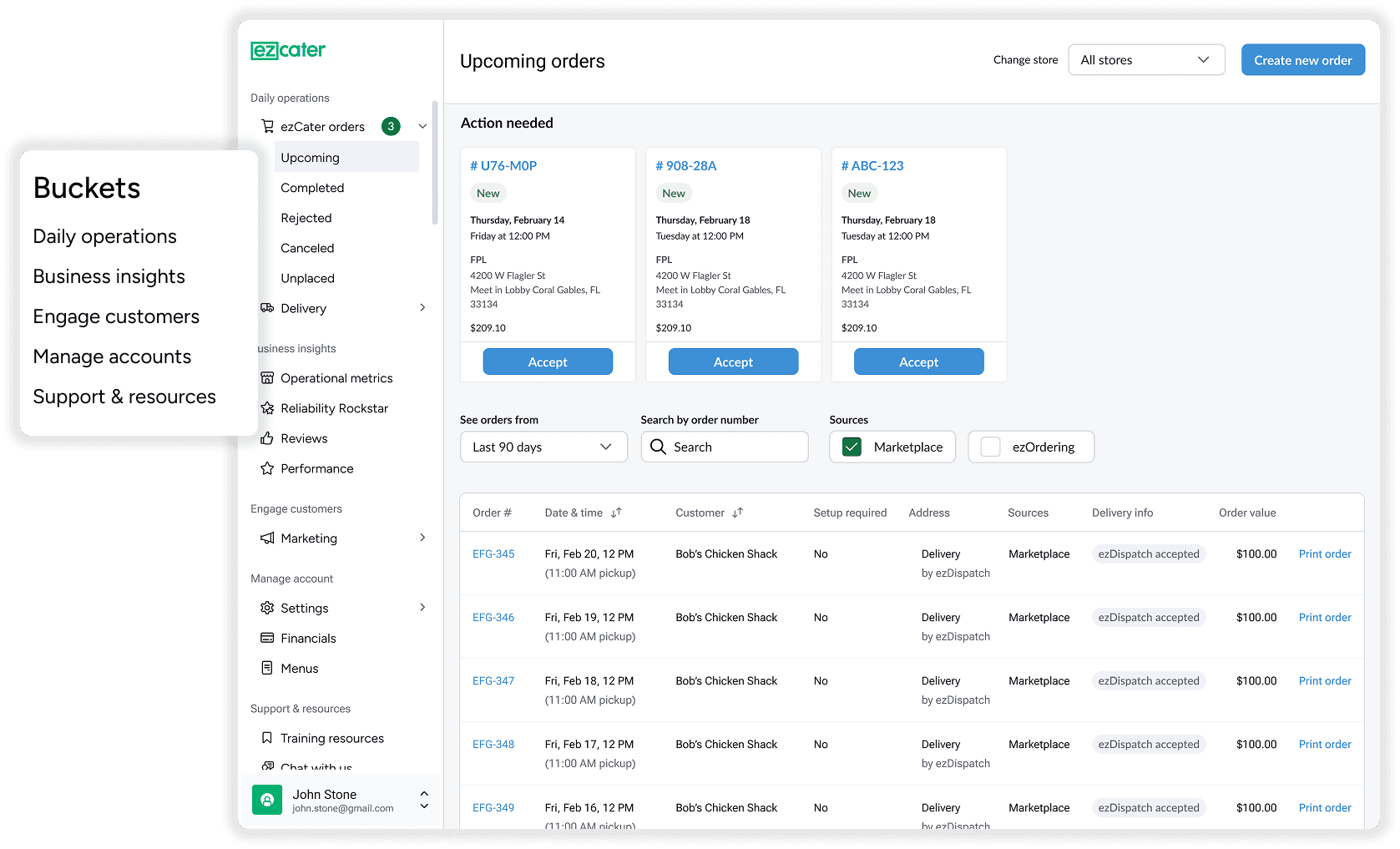
Based on this research, a strong product design decision was to restructure ezManage around restaurant partners’ operational mental models rather than internal product features. By organizing navigation and workflows into clear categories like daily operations, business insights, and store settings the experience aligned with how partners actually run their catering businesses, reducing cognitive load, improving task efficiency, and making the product feel immediately familiar and easier to use.
A look into the new navigation
Design decision 02
Highlighting what’s important and actionable
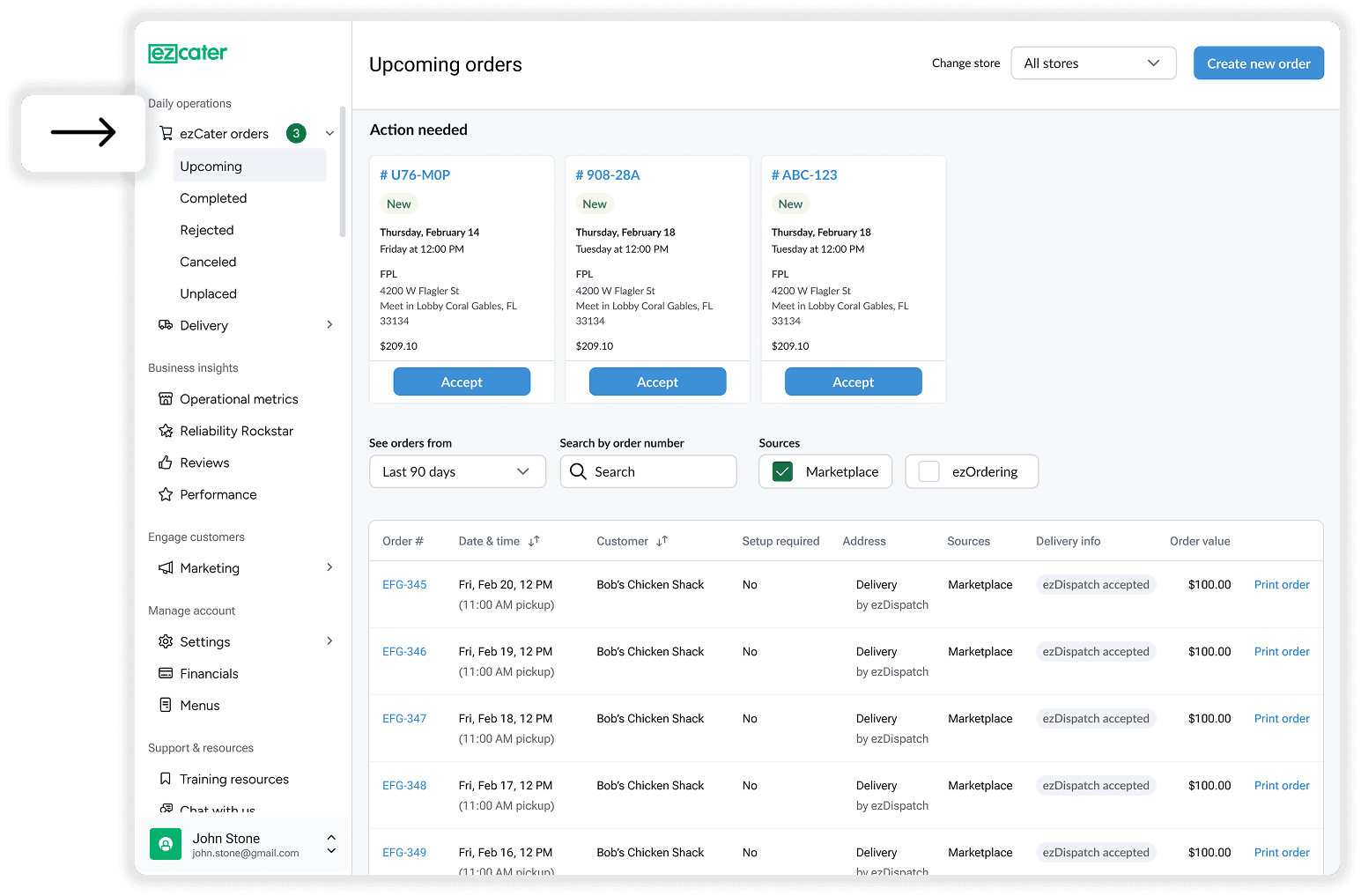
As part of the navigation overhaul, I introduced real-time order notifications and a visible count of orders ready to be accepted directly within the navigation. This made incoming work immediately actionable, reduced the chance of missed orders, and helped restaurant partners respond faster during busy operational moments, directly supporting higher order acceptance and improved operational efficiency.
Incoming orders are now always visible and immediately actionable.
Customer feedback
Used navigation to drive continuous onboarding and faster setup
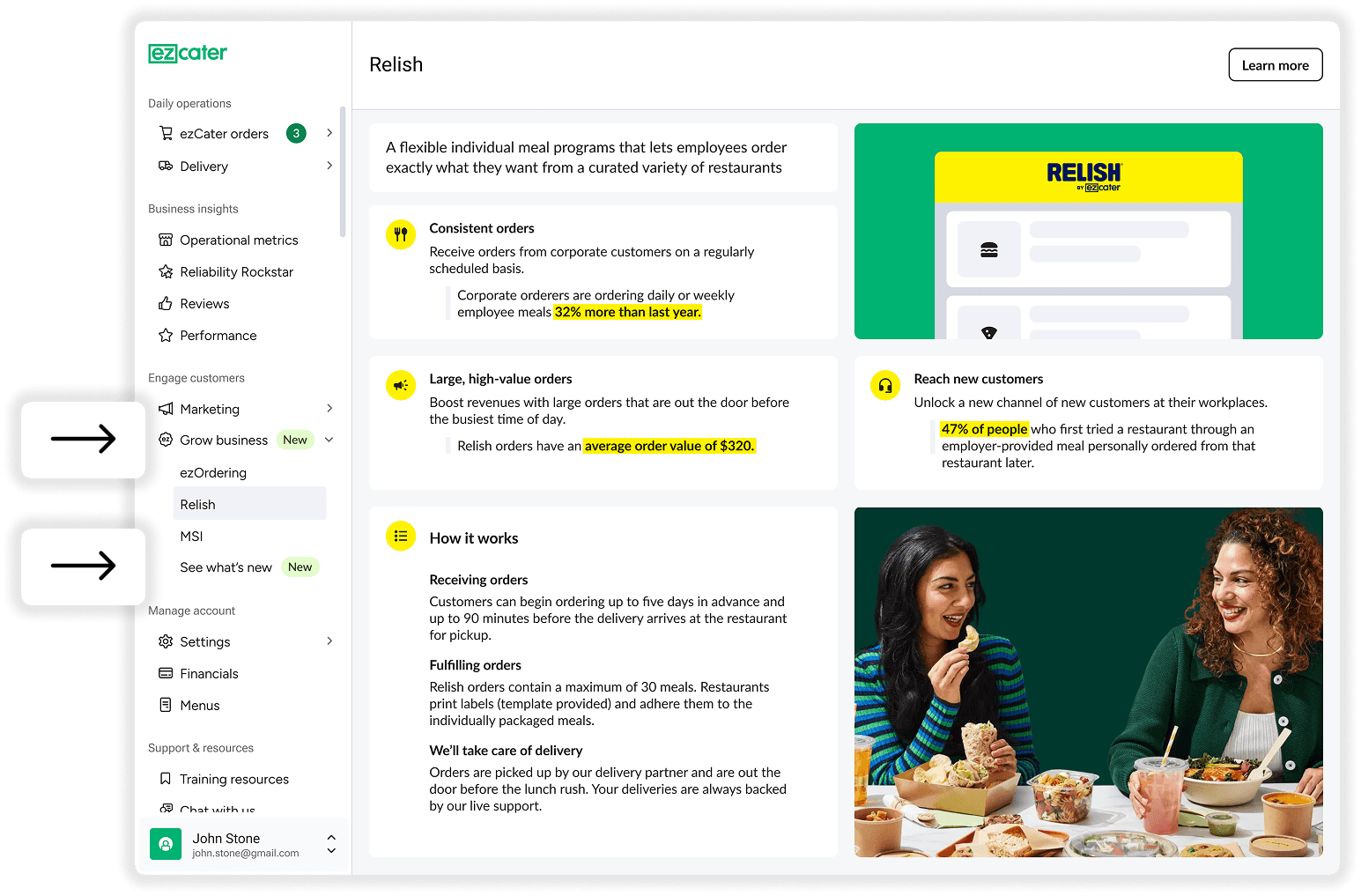
Usability testing revealed that restaurant partners struggled to discover newly added features and were often unsure where to find additional offerings like Relish and Group Ordering. To address this, I introduced “Grow Business” and “See what’s new” navigation headers that clearly surfaced expansion opportunities in one consistent location, reinforcing feature discovery as an ongoing experience rather than a one-time onboarding moment. This approach reduced friction, improved awareness of new capabilities, and helped partners more easily adopt tools designed to drive incremental orders and business growth.
Collaboration
Validating design system components through real product work
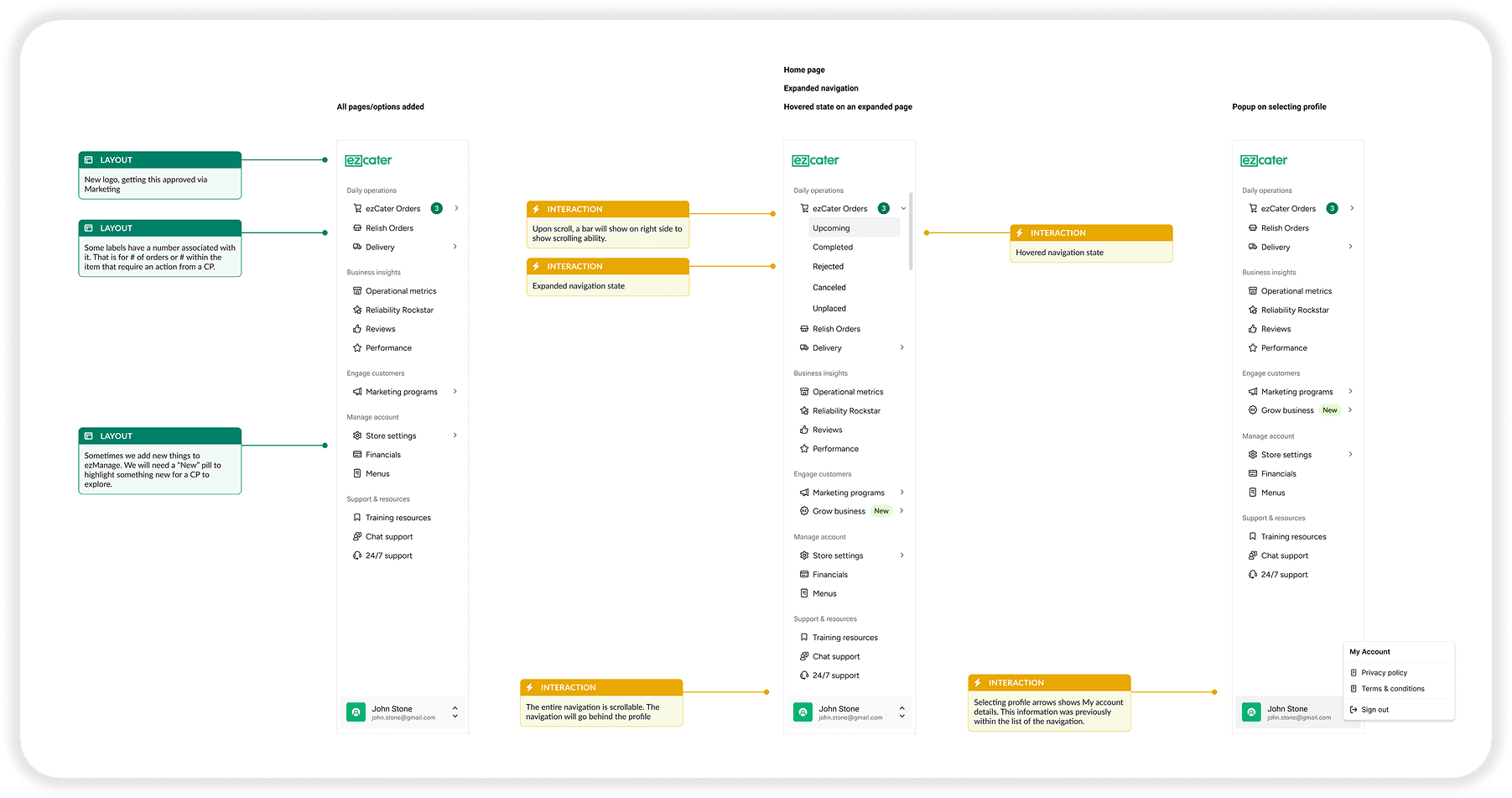
I partnered closely with engineering throughout this project to ensure design intent translated clearly into build-ready solutions. I produced detailed specs that called out layout behavior, interaction states, and the functional logic behind elements like buttons, popovers, and notifications, reducing ambiguity and speeding up implementation. This work also served as a testing ground for adopting ShadCN as a component library within the Ingredients design system, allowing design and engineering to validate component flexibility, consistency, and scalability before broader system adoption.
Impact